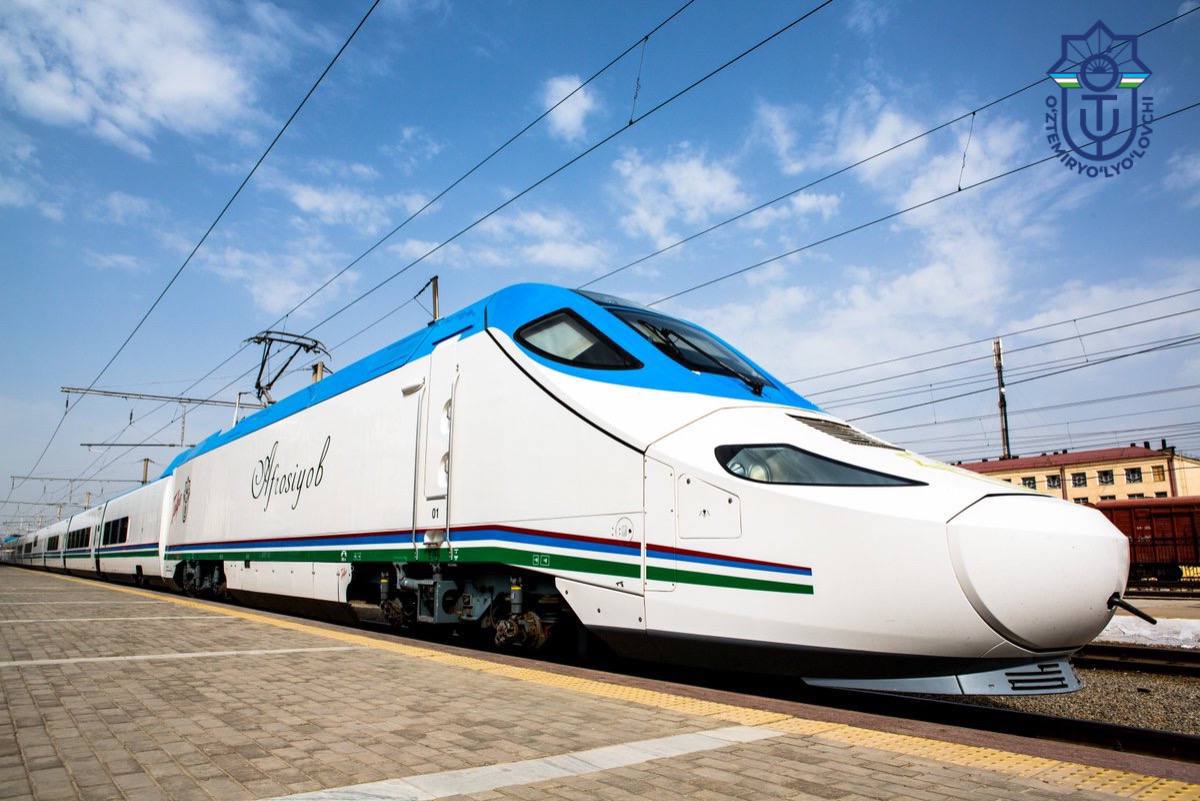
The long, contemplative journey across the Kyzylkum desert—a staple of the Silk Road experience—is undergoing a high-tech metamorphosis. For decades, reaching the mud-brick majesty of Khiva meant committing to a 14-hour overnight trek from Tashkent. But as of 2026, the landscape of Uzbek travel has shifted. The arrival of the first “Jaloliddin Manguberdi” high-speed trainsets marks a turning point, slashing that travel time nearly in half to just 7 hours and 40 minutes.
From the viewing platforms of Tashkent’s Northern Station, the sight of the new South Korean-engineered Hyundai Rotem trains represents more than just a logistical upgrade. It is a symbol of a nation in a hurry to connect its storied past with a modern, hyper-mobile future.
Beyond the Tracks: A New Accessibility
The electrification of the 465-kilometer stretch between Bukhara and Khiva is the final piece of a grand puzzle. By connecting the “Golden Triangle” of Samarkand, Bukhara, and Khiva via a continuous high-speed corridor, Uzbekistan is effectively bringing its most remote UNESCO treasure into the immediate orbit of the capital.
For the traveler, this means the “end of the road” feeling that once defined Khiva is evaporating. You can now breakfast in the cosmopolitan cafes of Tashkent and reach the gates of Itchan Kala in time for a sunset dinner. This connectivity is expected to double passenger capacity on the route, potentially bringing over 3 million visitors annually to the Khorezm region.
The Modernist Tension
As with the construction cranes currently reshaping the skylines of Samarkand and Bukhara, the high-speed rail brings a familiar debate to Khiva’s doorstep. The efficiency of the 250 km/h service is undeniable, but it accelerates the pace of change in a city famous for its stillness.
Within Khiva’s ancient walls, the pressure to accommodate this new influx is palpable. Traditional mud-and-straw dwellings are increasingly giving way to boutique hotels, and the quiet desert outpost is rapidly transforming into a polished, accessible hub. The new rail link ensures that Khiva is no longer an arduous “add-on” to a trip, but a primary, easily reachable destination.
A Climate-Resilient Leap
Engineered specifically for the extremes of Central Asia, these new trains are built to glide through sandstorms and withstand temperatures ranging from bitter Siberian winters to blistering desert summers. With VIP, Business, and Economy classes, the service aims to provide a world-class experience that competes directly with domestic flights, offering a more sustainable and scenic alternative for crossing the steppe.
As the first commercial runs begin this year, Uzbekistan cements its status as the regional leader in modern infrastructure. The clatter of the old sleepers is fading, replaced by the quiet hum of electric high-speed rail—a sound that defines the new era of the Silk Road.